
"Myristoyl-transportan−LyP-1 tandem peptide was synthesized by CPC Scientific (sequence: myr-GGWTLNSAGYLLGKINLKALAALAKKIL-GGGG-CGNKRTRGC, Cys−Cys bridge). FAM-labeled LyP-1 bearing an azide (azidoacetyl-GGG-cyclo-(EGNKRTRGK)), FAM-labeled LyP-1 bearing a cysteine (C-K(5FAM)-C6-cyclo-(CGNKRTRGC)) and transportan bearing a C-terminal cysteine (myristic acid-GGWTLNSAGYLLGKINLKALAALAKKILC) were synthesized by CPC Scientific, Inc."
Abstract
Nanoparticulate systems have shown great promise in overcoming the considerable trafficking barriers associated with systemic nucleic acid delivery, which must be addressed in order to unlock the full potential of technologies such as RNAi and gene editing in vivo. In addition to mediating the cytoplasmic delivery of nucleic cargo and shielding it from nuclease degradation and immunostimulation, nucleic acid-containing nanomaterials delivered intravenously must also be stable in the bloodstream after administration in order to avoid toxicity and off-target delivery. To this end, the hydrophilic molecule polyethylene glycol (PEG) has been deployed in many different nanoparticle systems to prevent aggregation and recognition by the reticuloendothelial system. However, the optimal strategy for incorporating PEG into self-assembled nucleic acid delivery systems to obtain nanoparticle stability while retaining important functions such as receptor targeting and cargo activity remains unclear. In this work, we develop substantially improved formulations of tumor-penetrating nanocomplexes (TPNs), targeted self-assembled nanoparticles formulated with peptides and siRNA that have been shown to mitigate tumor burden in an orthotopic model of ovarian cancer. We specifically sought to tailor TPNs for intravenous delivery by systematically comparing formulations with three different classes of modular PEG incorporation, namely PEG graft polymers, PEG lipids, and PEGylated peptide – each synthesized using straightforward bioconjugation techniques. We found that addition of PEG lipids or PEGylated peptide carriers led to formation of small and stable nanoparticles, but only nanoparticles formulated with PEGylated peptide carriers retained substantial activity in a gene silencing assay. In vivo, this formulation significantly decreased accumulation in off-target organs and improved initial availability in circulation, compared to the original non-PEGylated particles. Thus, from amongst a set of candidate strategies, we identified TPNs with admixed PEGylated peptide carriers as the optimal formulation for systemic administration of siRNA, based on their performance in a battery of physicochemical and biological assays. Moreover, this optimized formulation confers pharmacologic advantages that may enable further translational development of tumor-penetrating nanocomplexes, highlighting the preclinical value of comparing formulation strategies, and the relevance of this systematic approach for the development of other self-assembled nanomaterials.
SOCIAL MEDIA
Connect with us and stay updated by following our social media channels.
Latest Briefings from our Knowledge Center
Press Releases, Industry News, Articles, and Technical Content
DePalma, S. J.; Davidson, C. D.; Stis, A. E.; Helms, A. S.; Baker, B. M., Biomaterials Science, 2021, 9 (1), 93-107.
.. matrices were functionalized with cell adhesive peptides.. Gly-Phe-Hyp-Gly-Glu-Arg (GFOGER; CPC Scientific) via Michael-Type addition to available vinyl sulfone groups."
Zonari, A.; Brace, L. E.; Al-Katib, K. Z.; Porto, W. F.; Foyt, D.; Guiang, M.; Cruz, E. A. O.; Marshall, B.; Salgueiro, W. G.; Inan, M. D., bioRxiv 2020, 2020.10. 30.362822.
The top hits peptides selected (peptide 14, 144, 156, 195, and 393) from the screening were purchased from CPC Scientific Inc.
Diao, J., Komura, R., Sano, T., Pantua, H., Storek, K.M., Inaba, H., Ogawa, H., Noland, C.L., Peng, Y., Gloor, S.L. and Yan, D. bioRxiv (2020): 2020-10.
- Departments of Infectious Diseases, Structural Biology, Biochemical and Cellular Pharmacology, Translational Immunology, Pathology, and Early Discovery Biochemistry, Genentech, South San Francisco, CA 94080 USA
The standard assay consists of 6 μL reaction mixture with 3 nM Lgt-DDM, 50 μM phosphatidylglycerol (1,2-dipalmitoyl-sn-glycero-3-phospho-(1’-rac-glycerol), Avanti), 12.5 μM Pal-IAAC peptide substrate derived from the Pal lipoprotein (MQLNKVLKGLMIALPVMAIAACSSNKN, synthesized by CPC Scientific)
Pantua, H., Skippington, E., Braun, M.G., Noland, C.L., Diao, J., Peng, Y., Gloor, S.L., Yan, D., Kang, J., Katakam, A.K. and Reeder, J. MBio 11, no. 5 (2020): 10-1128.
- Departments of Infectious Diseases, OMNI Bioinformatics, Chemistry, Structural Biology, Biochemical and Cellular Pharmacology, Translational Immunology, Pathology, Molecular Biology, Genentech, South San Francisco, California, USA
MQLNKV-L(U13C6,15N)-KGL(U13C6,15N)MIALPVMAIAA-dipalmitoyl2C-SSNKNGG-K-biotin, which upon cleavage by LspA, yields the product peptide dipalmitoyl2C-SSNKNGG-K-biotin. A product standard [dipalmitoyl2C-SSNKNAAK-(NHCH2CH2NH)-biotin; CPC Scientific] was in the reaction mixture as an internal standard for normalization of product quantitation.
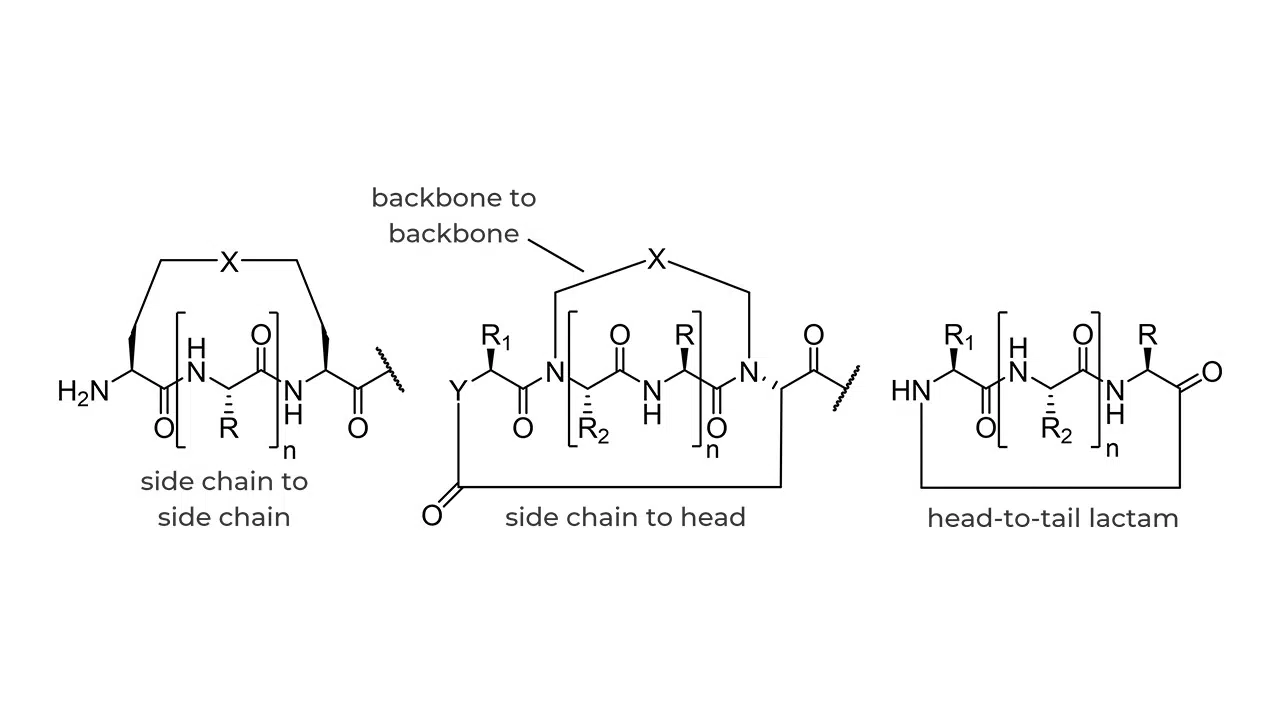
Protein-protein and protein-peptide interactions play critical roles in all types of cellular processing. Peptides are natural partners to proteins and, as ligands, bind to proteins with high affinity due to their capacity to adapt to the often flexible protein surface. Despite this, peptides have drawbacks as drug candidates that include low plasma bioavailability, instability from proteolytic enzymes, and poor passive membrane permeability. Some success has been achieved with linear peptides, particularly peptides that maintain α-helical secondary structures. These motifs can be introduced to stabilized α-helical motifs by common “peptide-stapling” approaches, but stapled peptides can suffer from low bioactivity and poor solubility. Another strategy to maintain peptide secondary structure is modification by macrocyclization.
SAN JOSE, CA., Sept 3, 2020 /CPCNewswire/ — CPC Scientific Inc. is pleased to announce that the European Commission (EC) has granted the Conditional Marketing Authorization (CMA) for MYR Pharmaceuticals lead compound HEPCLUDEX®. CPC Scientific serves as a supplier and partner to MYR Pharmaceuticals for the development and manufacturing of bulevirtide (Hepcludex). This drug is […]

Curreli, Francesca, Sofia MB Victor, Shahad Ahmed, Aleksandra Drelich, Xiaohe Tong, Chien-Te K. Tseng, Christopher D. Hillyer, and Asim K. Debnath. Mbio 11, no. 6 (2020): e02451-20.
We have synthesized (CPC Scientific, Inc.) four stapled peptides, as depicted in Figure 2. We also synthesized the linear peptide, NYBSP-C, as a control. Besides, we purchased a linear peptide, SBP1, to use as a control, which was reported recently to bind to SARS-CoV-2 RBD with high affinity (KD = 47nM).
Abdulganiyyu, I. A.; Kaczmarek, K.; Zabrocki, J.; Nachman, R. J.; Marchal, E.; Schellens, S.; Verlinden, H.; Broeck, J. V.; Marco, H.; Jackson, G. E. Insect Biochemistry and Molecular Biology 2020, 103362.
A head-to-tail cyclic, octapeptide analog of Locmi-AKH-I, cycloAKH (cyclo[LNFTPNWG]) was synthesized to severely restrict the conformational freedom of the AKH structure.