
Unnatural amino acids are considered non-proteinogenic (i.e., not contained in protein sequences) amino acids that are created synthetically or occur naturally without incorporation into proteins and peptides. Because unnatural amino acids are not found in proteins, enzymes do not often recognize them as cleavage sites for proteolytic degradation. In synthetic peptides, however, these building blocks can be incorporated into custom peptides for a variety of applications, including as conformational constraints, pharmacologically active ingredients, construction of diverse combinatorial libraries, and in robust molecular scaffolds. Unnatural amino acids comprise an almost infinite array of molecular elements that when adapted with appropriate protection groups can be easily incorporated into a custom peptide.
Drug Development
Drug development often benefits from the incorporation of unnatural amino acids into custom peptides and peptidomimetics (including peptide-peptoid hybrids). CPC Scientific can manufacture peptides that include any number of unnatural amino acids, some of which include:
- β-amino acids (β3 and β4)
- γ-amino acids
- N-alkylated derivatives
- Peptoid derivatives
- Homo-amino acids
- cysteine derivatives (e.g., penicillamine)
- hydroxylated amino acids (e.g., hydroxyproline)
- Bicyclic amino acids (e.g., azabicyclo[2.2.1]heptane)
- Aromatic amino acids (e.g., aminobenzoic acid and derivatives)
- Halogenated derivatives (e.g, 5F-Trp)
- Nitro derivatives (e.g., nitro-tyrosine)
- Branched-chain amino acid derivatives
Chemistry

Aliphatic Unnatural Amino Acids

Aromatic Unnatural Amino Acids

Non-Proteinogenic Peptide Citations

Quigley, Neil Gerard, Katja Steiger, Stefanie Felicitas Färber, Frauke Richter, Wilko Weichert, and Johannes Notni. Molecular Pharmaceutics (2024), 21(4), 1827-1837.
… by positron emission tomography (PET) imaging and ex vivo … clinical PD-L1 PET imaging because it detects even very low … The peptide WL12 was purchased from CPC Scientific (San …
Design-rules for stapled peptides with in vivo activity and their application to Mdm2/X antagonists.
Chandramohan, A., Josien, H., Yuen, T.Y., Duggal, R., Spiegelberg, D., Yan, L., Juang, Y.C.A., Ge, L., Aronica, P.G., Kaan, H.Y.K. and Lim, Y.H. Nature Communications 15, no. 1 (2024): 489.
- Merck & Co., Inc., Kenilworth, NJ 07033, USA.
- Merck & Co., Inc., Boston, MA 02115, USA
- Merck & Co., Inc., West Point, PA 19486, USA
- Genentech, South San Francisco, CA 94080, USA
We thank Evans (Chen) Ge, Mike (Dixin) Xue, and Simon (Junhua) Li at Chinese Peptide Company (CPC) for peptide synthesis support.

Lin, Wilson, Eduardo Aluicio-Sarduy, Hailey A. Houson, Todd E. Barnhart, Volkan Tekin, Justin J. Jeffery, Ashley M. Weichmann, Kendall E. Barrett, Suzanne E. Lapi, and Jonathan W. Engle. Nuclear Medicine and Biology) 118 (2023): 108329.
Lyophilized NOTA-NT-20.3 (Ac-Lys(NOTA)-Pro-NMeArg-Arg-Pro-Tyr-Tle-Leu, 1383.6 g/mol, “NT”, CPC Scientific) was diluted to 1 mg/mL in ultrapure water (Milli-Q, >18.2 MΩ-cm) and used without further purification.
Ikeda, Z., Kakegawa, K., Kikuchi, F., Itono, S., Oki, H., Yashiro, H., Hiyoshi, H., Tsuchimori, K., Hamagami, K., Watanabe, M. and Sasaki, M. Journal of Medicinal Chemistry 65, no. 12 (2022): 8456-8477.
- Research, Takeda Pharmaceutical Company Limited, 26-1, Muraokahigashi 2-chome, Fujisawa, Kanagawa 251-8555, Japan
Subsequently, 5FAM–Abu–Gly–Asp–Asp–Asp–Lys–Ile–Val–Gly–Gly–Lys(CPQ2)–Lys–Lys–NH2 (purity: 97.2%, CPC Scientific, Inc.) was diluted with an assay buffer to prepare a 2.1 μM substrate solution.

Lopez, Andrea, Denis E. Reyna, Nadege Gitego, Felix Kopp, Hua Zhou, Miguel A. Miranda-Roman, Lars Ulrik Nordstrøm et al. Nature Communications 13, no. 1 (2022): 1-18.
"Hydrocarbon-stapled peptide corresponding to the BH3 domain of BIM, FITC-BIM SAHBA2: FITC-βAla-EIWIAQELRS5IGDS5F’NAYYA-CONH2, where S5 represents the non-natural amino acid inserted for olefin metathesis, was synthesized, purified at >95% purity by CPC Scientific Inc."
Lenz, Morgan R., Shih-Yen Tsai, Anne E. Roessler, Yang Wang, Periannan Sethupathi, W. Keith Jones, Gwendolyn L. Kartje, and William H. Simmons. Journal of Pharmacology and Experimental Therapeutics 380, no. 3 (2022): 220-229.
"The ST-115 [ [(S)-2-mercapto-4-methylpentanoyl]-4(S)-fluoro-Pro-Pro-3(R)-beta-Pro] preparation used in this study was custom synthesized by CPC Scientific, Inc., (Sunnyvale, CA), a GMP-capable company. The synthetic scheme is detailed in US patent"
Soleimany, Ava P., [..] Sangeeta N. Bhatia. Cancer Research 81, no. 1 (2021): 213-224.
All peptides were synthesized by CPC Scientific (Sunnyvale, CA) and reconstituted in dimethylformamide (DMF) unless otherwise specified. Sequences are provided in Supplementary Table S1.

Axiak-Bechtel, Sandra M., Stacey B. Leach, David G. Scholten, Jessica R. Newton-Northup, Brendan J. Johnson, H. E. Durham, Kenneth A. Gruber, and Michael F. Callahan. Pharmacology Research & Perspectives 9, no. 3 (2021): e00777.
TCMCB07 [a cyclic substituted melanocortin antagonist with the structure Ac- Nle- cyclo[Asp- Pro- DNal(2’)-Arg- Trp- Lys]- DVal- DPro- NH2] was manufactured by CPC Scientific Inc. under cGMP conditions. Active pharmaceutical ingredient was dissolved in milliQ water at 10 mg ml−1, sterile filtered [..]”

GhavamiNejad, A.; Lu, B.; Samarikhalaj, M.; Liu, J. F.; Mirzaie, S.; Pereira, S.; Zhou, L.; Giacca, A.; Wu, X. Y., Drug Delivery and Translational Research 2021, 1-13.
"PRL-2903 (PRL) was synthesized and purchased from CPC Scientific Inc. (San Jose, CA, USA)."
DePalma, S. J.; Davidson, C. D.; Stis, A. E.; Helms, A. S.; Baker, B. M., Biomaterials Science, 2021, 9 (1), 93-107.
.. matrices were functionalized with cell adhesive peptides.. Gly-Phe-Hyp-Gly-Glu-Arg (GFOGER; CPC Scientific) via Michael-Type addition to available vinyl sulfone groups."
Makris, G.; Bandari, R. P.; Kuchuk, M.; Jurisson, S. S.; Smith, C. J.; Hennkens, H. M., Molecular Imaging and Biology, 2021, 23 (1), 52-61.
"NOTA/NODAGA-6Ahx- DPhe-Gln-Trp-Ala-Val-Gly-His-Sta-Leu-NH2 ; NOTA: 2,2′,2″-(1,4,7-triazacyclononane-1,4,7-triyl)triacetic acid and NODAGA: 2-(4,7-bis( carboxymethyl)-1,4,7-triazonan-1-yl)pentanedioic acid] were purchased from CPC Scientific [..]"
Chan, Leslie W., Melodi N. Anahtar, Ta-Hsuan Ong, Kelsey E. Hern, Roderick R. Kunz, and Sangeeta N. Bhatia. Nature Nanotechnology (2020): 1-9.
HFA-modifed peptides were synthesized by CPC Scientifc (>95% purity). Briefy, the peptide substrate, Ac-CKKK(Cy5)-PEG4-Nle(O-Bzl)-Met(O)2-Oic-Abu-OH, was synthesized on Fmoc-Abu-CTC resin via standard Fmoc solid phase peptide synthesis.
Hao, Liangliang, Renee T. Zhao, Chayanon Ngambenjawong, Heather E. Fleming, and Sangeeta Bhatia. bioRxiv (2020).
All peptides were chemically synthesized by CPC Scientific, Inc. [..] K(N3)-ANP-GPVPLSLVMGGC [..] 5FAM-GGf-Pip-KSGGGK(CPQ2)-PEG2-GC
Capaccione, Kathleen M., Mikhail Doubrovin, Nikunj Bhatt, Akiva Mintz, and Andrei Molotkov. Molecules 25, no. 13 (2020): 3102.
NOTA–β-Ala–Gly–Gly–Ile–Glu–Phe–Asp–CHO (NOTA-GZP) was purchased from CPC scientific, Sunnyvale, CA, USA.

Baba, Osamu, Andrew Elvington, Martyna Szpakowska, Deborah Sultan, Gyu Seong Heo, Xiaohui Zhang, Hannah Luehmann et al. bioRxiv (2020).
The FC131 peptide (cyclo[2-Nal-Gly-d-Tyr-NMe-d-Orn-Arg]) was synthesized by CPC Scientific (Sunnyvale, CA).
Ng, Ee Xien, Myat Noe Hsu, Guoyun Sun, and Chia-Hung Chen. Methods in Enzymology 628 (2019): 59-94.
The peptide sequences of the four FRET-based substrates ([..] CPC Scientific) are as follows: UV: AlexaFluor405-Leu-Ala-Gln-Ala-HompheArg-Ser-Lys (QSY35)-NH2; Blue: Dabcyl-Gly-Pro-Leu-Gly-Met-Arg-Gly-Lys (5-FAM)-NH2; Green: QSY7-Ala-Pro-Phe-Glu..
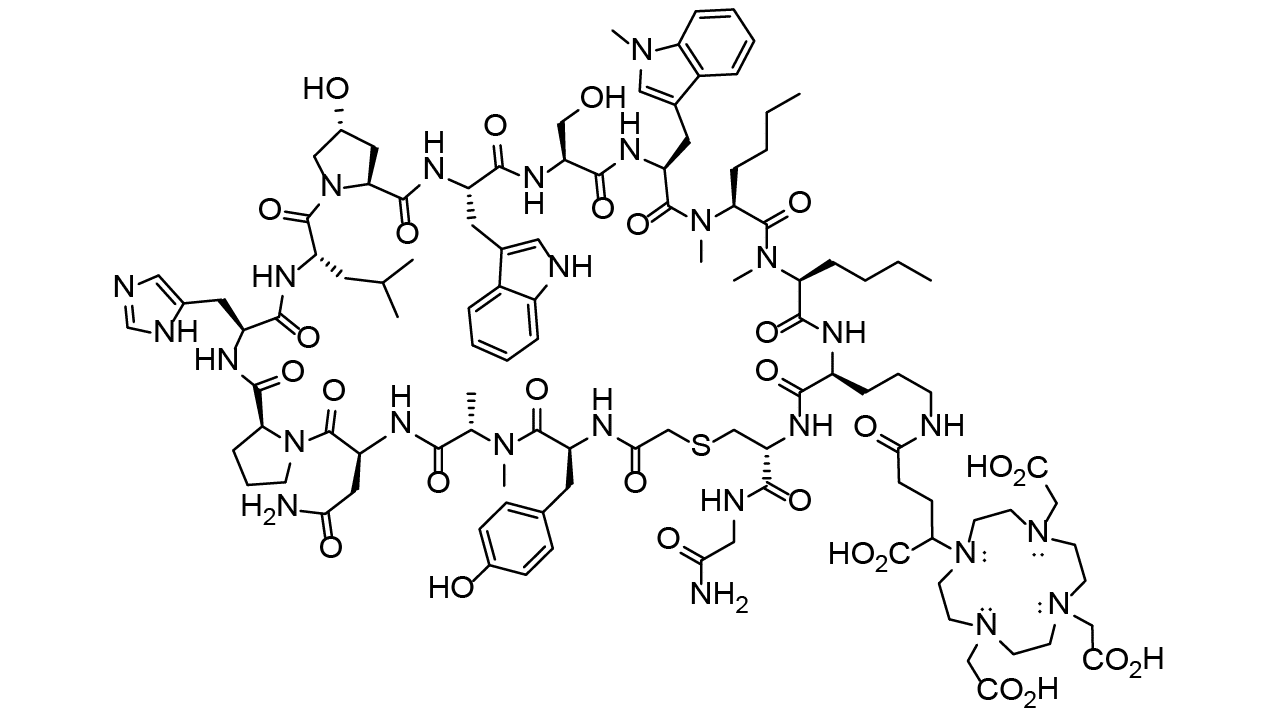
Lesniak, W. G.; Mease, R. C.; Chatterjee, S.; Kumar, D.; Lisok, A.; Wharram, B.; Kalagadda, V. R.; Emens, L. A.; Pomper, M. G.; Nimmagadda, S., Molecular Imaging 2019, 18, 1536012119852189.
The PD-L1-binding peptide, WL12 (sequence shown in Figure 1A), was custom synthesized by CPC Scientific (Sunnyvale, California) with >95% purity.
Melgar-Asensio, Ignacio, et al. Investigative Ophthalmology & Visual Science 59.10 (2018): 4071-4081.
Thio-peptide: NH2-Cys-PEG4-Sar-YNLYRVRS-NH2, MW 1,490 g/mol was custom synthesized, via solid state methods by CPC Scientific (Sunnyvale, CA, USA).
Hornigold, D.C., Roth, E., Howard, V., Will, S., Oldham, S., Coghlan, M.P., Blouet, C. and Trevaskis, J.L. Appetite 127 (2018): 334-340.
- Cardiovascular and Metabolic Diseases, MedImmune Ltd, Milstein Building, Granta Park, Cambridge, CB21 6GH, UK
- University of Cambridge, Department of Clinical Biochemistry, MRC Metabolic Diseases Unit, Addenbrooke's Hospital, Cambridge, CB2 0QQ, UK
- Cardiovascular and Metabolic Diseases, MedImmune LLC, One MedImmune Way, Gaithersburg, MD 20878, USA
AC3174 (Amylin Pharmaceuticals) is a functional analog of exenatide (Hargrove et al., 2007). AC170222 (Hpa-Nle-Gly-Trp-Lys(Tac)-Asp-NMePhe-NH2; CPC Scientific, Sunnyvale, CA) is a CCKR1-selective peptide (Pierson et al., 2000).
Nuss, Andrew B., and Mark R. Brown. General and Comparative Endocrinology (2017).
"A bioactive form of AaILP3 (norLeu substituted for Met) was synthesized in the laboratory (Brown et al., 2008) and later by CPC Scientific, Inc. (Sunnyvale, CA). [..] stephensi ILP3 and ILP4 (CPC Scientific, Inc.)"
Wang, X., Kurowski, S., Wu, W., Castriota, G.A., Zhou, X., Chu, L., Ellsworth, K.P., Chu, D., Edmondson, S., Ali, A. and Andre, P. Journal of Pharmacology and Experimental Therapeutics 360, no. 3 (2017): 476-483.
- Departments of Cardiometabolic Disease Biology, Discovery Pharmaceutical Sciences, In Vitro Pharmacology, and Discovery Chemistry, Merck Research Laboratories, Kenilworth, New Jersey.
- Lead Optimization Chemistry, Merck Research Laboratories, Rahway, New Jersey.
The 7-amido-4-thifluoromethylcoumarin (AFC) containing fluorescence substrate, CH3SO2-cyclohexyl-Gly-Gly-Arg-AFC (cyclohexyl-G-G-R-AFC) was custom synthesized by CPC Scientific (Sunnyvale, CA, USA)..
Barbieri, Christopher M., et al. Journal of Pharmacology and Experimental Therapeutics 360.3 (2017): 466-475.
- In Vitro Pharmacology and Cardiometabolic Diseases, Merck & Co., Inc., Kenilworth, New Jersey
"The 7-amido-4-thifluoromethylcoumarin (AFC) containing fluorescence substrate, CH3SO2-cyclohexyl-Gly-Gly-Arg-AFC (cyclohexylG-G-R-AFC) was custom synthesized by CPC Scientific (Sunnyvale, CA, USA)"

Chatterjee, Samit, et al. Biochemical and Biophysical Research Communications 483.1 (2017): 258-263.
PD-L1 binding peptide, WL12, was custom synthesized by CPC Scientific (Sunnyvale, CA) with >95% purity.
Ayhan, Dilay Hazal, et al. PLoS Biol 14.9 (2016): e1002552.
"The cell-penetrating peptide (RXR)4XB, where R is arginine, X is aminohexanoic acid, and B is beta-alanine, was synthesized using standard FMOC chemistry and purified to >95% purity at CPC Scientific (Sunnyvale, CA) and used without further purification."
Chen, Long, et al. Scientific Reports 6 (2016).
- Beijing National Laboratory for Molecular Sciences, College of Chemistry and Molecular Engineering, Synthetic and Functional Biomolecules Center, Peking University, Beijing 100871, China
- Department of Global Biotherapeutics Technologies, Pfizer Inc., Cambridge, MA 02140, USA
- School of Life Sciences, Nanjing University, China
- Peking-Tsinghua Center for Life Sciences, Beijing, China
"The Biotin-C6-LELPETGG-NH2, GGGY-Lys(Biotin)-NH2, and GGG-Lys(N3)-NH2 reagents were synthesized by CPC Scientific."
Leclair, E., Liggins, R.T., Peckett, A.J., Teich, T., Coy, D.H., Vranic, M. and Riddell, M.C. Diabetologia (2016): 1-8.
"The SSTR2a (PRL-2903) was purchased by CPC Scientific (Sunnyvale, CA, USA) and the dose (10 mg/kg body mass) approximated that given in our prior studies [25–27]. The antagonist was dissolved in saline and given in a 2 ml/kg volume."

Zhu, Shu, et al. Blood 126.12 (2015): 1494-1502.
"The custom-made thrombin-sensitive peptide azidoacetyl-AK(5FAM)-GALVPRGSAGK(CPQ2)-NH2 was obtained from CPC Scientific (Sunnyvale, CA) for click reactions to anti-CD61, as previously described."
Magee, T.V., Brown, M.F., Starr, J.T., Ackley, D.C., Abramite, J.A., Aubrecht, J., Butler, A., Crandon, J.L., Dib-Hajj, F., Flanagan, M.E. and Granskog, K. Journal of Medicinal Chemistry 56, no. 12 (2013): 5079-5093.
- Pfizer Worldwide Research & Development, Pfizer, Inc., Groton, Connecticut 06340, United States
- CPC Scientific, Hangzhou, P.R. China

Gothard, Chris M., and James S. Nowick. The Journal of Organic Chemistry 75.6 (2009): 1822-1830.
This paper introduces the unnatural amino acids m-Abc2K and o-Abc2K as nanometer-sized building blocks for the creation of water-soluble macrocycles with well-defined shapes. m-Abc2K and o-Abc2K are homologues of the nanometer-sized amino acid Abc2K, which we recently introduced for the synthesis of water-soluble molecular rods of precise length. [J. Am. Chem. Soc. 2007, 129, 7272]. Abc2K is linear (180°), m-Abc2K creates a 120° angle, and o-Abc2K creates a 60° angle. m-Abc2K and o-Abc2K are derivatives of 3’-amino-[1,1’-biphenyl]-4-carboxylic acid and 2’-amino-[1,1’-biphenyl]-4-carboxylic acid, with two propyloxyammonium side chains for water solubility.

Gothard, Chris M., Nosheen A. Rao, and James S. Nowick. Journal of the American Chemical Society 129, no. 23 (2007): 7272-7273.
This paper introduces the unnatural amino acid Abc2K as a nanometer-length building block for the creation of water-soluble molecular rods of exceptional size. Abc2K is a water-soluble variant of the unnatural amino acid 4’-amino-[1,1’-biphenyl]-4-carboxylic acid (Abc) with lysinelike propyloxyammonium side chains at the 2- and 5-positions. The protected building block Fmoc-Abc2K(Boc)-OH (1) can be used in standard Fmoc-based solid-phase peptide synthesis to create water-soluble rodlike peptides in nanometer unit lengths up to at least ten nanometers.