
MQLNKV-L(U13C6,15N)-KGL(U13C6,15N)MIALPVMAIAA-dipalmitoyl2C-SSNKNGG-K-biotin, which upon cleavage by LspA, yields the product peptide dipalmitoyl2C-SSNKNGG-K-biotin. A product standard [dipalmitoyl2C-SSNKNAAK-(NHCH2CH2NH)-biotin; CPC Scientific] was in the reaction mixture as an internal standard for normalization of product quantitation.
Abstract
Clinical development of antibiotics with novel mechanisms of action to kill pathogenic bacteria is challenging, in part, due to the inevitable emergence of resistance. A phenomenon of potential clinical importance that is broadly overlooked in preclinical development is heteroresistance, an often-unstable phenotype in which subpopulations of bacterial cells show decreased antibiotic susceptibility relative to the dominant population. Here, we describe a new globomycin analog, G0790, with potent activity against the Escherichia coli type II signal peptidase LspA and uncover two novel resistance mechanisms to G0790 in the clinical uropathogenic E. coli strain CFT073. Building on the previous finding that complete deletion of Lpp, the major Gram-negative outer membrane lipoprotein, leads to globomycin resistance, we also find that an unexpectedly modest decrease in Lpp levels mediated by insertion-based disruption of regulatory elements is sufficient to confer G0790 resistance and increase sensitivity to serum killing. In addition, we describe a heteroresistance phenotype mediated by genomic amplifications of lspA that result in increased LspA levels sufficient to overcome inhibition by G0790 in culture. These genomic amplifications are highly unstable and are lost after as few as two subcultures in the absence of G0790, which places amplification-containing resistant strains at high risk of being misclassified as susceptible by routine antimicrobial susceptibility testing. In summary, our study uncovers two vastly different mechanisms of resistance to LspA inhibitors in E. coli and emphasizes the importance of considering the potential impact of unstable and heterogenous phenotypes when developing antibiotics for clinical use.
SOCIAL MEDIA
Connect with us and stay updated by following our social media channels.
Latest Briefings from our Knowledge Center
Press Releases, Industry News, Articles, and Technical Content
DePalma, S. J.; Davidson, C. D.; Stis, A. E.; Helms, A. S.; Baker, B. M., Biomaterials Science, 2021, 9 (1), 93-107.
.. matrices were functionalized with cell adhesive peptides.. Gly-Phe-Hyp-Gly-Glu-Arg (GFOGER; CPC Scientific) via Michael-Type addition to available vinyl sulfone groups."
Zonari, A.; Brace, L. E.; Al-Katib, K. Z.; Porto, W. F.; Foyt, D.; Guiang, M.; Cruz, E. A. O.; Marshall, B.; Salgueiro, W. G.; Inan, M. D., bioRxiv 2020, 2020.10. 30.362822.
The top hits peptides selected (peptide 14, 144, 156, 195, and 393) from the screening were purchased from CPC Scientific Inc.
Diao, J., Komura, R., Sano, T., Pantua, H., Storek, K.M., Inaba, H., Ogawa, H., Noland, C.L., Peng, Y., Gloor, S.L. and Yan, D. bioRxiv (2020): 2020-10.
- Departments of Infectious Diseases, Structural Biology, Biochemical and Cellular Pharmacology, Translational Immunology, Pathology, and Early Discovery Biochemistry, Genentech, South San Francisco, CA 94080 USA
The standard assay consists of 6 μL reaction mixture with 3 nM Lgt-DDM, 50 μM phosphatidylglycerol (1,2-dipalmitoyl-sn-glycero-3-phospho-(1’-rac-glycerol), Avanti), 12.5 μM Pal-IAAC peptide substrate derived from the Pal lipoprotein (MQLNKVLKGLMIALPVMAIAACSSNKN, synthesized by CPC Scientific)
Pantua, H., Skippington, E., Braun, M.G., Noland, C.L., Diao, J., Peng, Y., Gloor, S.L., Yan, D., Kang, J., Katakam, A.K. and Reeder, J. MBio 11, no. 5 (2020): 10-1128.
- Departments of Infectious Diseases, OMNI Bioinformatics, Chemistry, Structural Biology, Biochemical and Cellular Pharmacology, Translational Immunology, Pathology, Molecular Biology, Genentech, South San Francisco, California, USA
MQLNKV-L(U13C6,15N)-KGL(U13C6,15N)MIALPVMAIAA-dipalmitoyl2C-SSNKNGG-K-biotin, which upon cleavage by LspA, yields the product peptide dipalmitoyl2C-SSNKNGG-K-biotin. A product standard [dipalmitoyl2C-SSNKNAAK-(NHCH2CH2NH)-biotin; CPC Scientific] was in the reaction mixture as an internal standard for normalization of product quantitation.
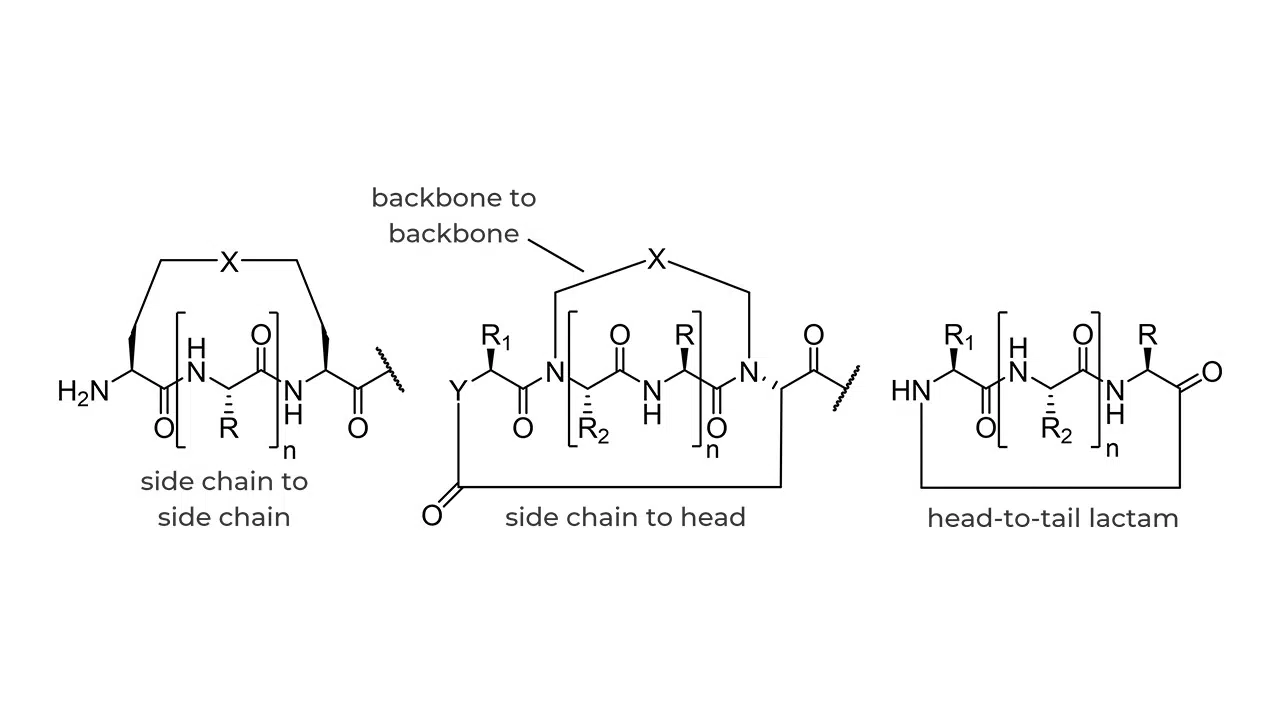
Protein-protein and protein-peptide interactions play critical roles in all types of cellular processing. Peptides are natural partners to proteins and, as ligands, bind to proteins with high affinity due to their capacity to adapt to the often flexible protein surface. Despite this, peptides have drawbacks as drug candidates that include low plasma bioavailability, instability from proteolytic enzymes, and poor passive membrane permeability. Some success has been achieved with linear peptides, particularly peptides that maintain α-helical secondary structures. These motifs can be introduced to stabilized α-helical motifs by common “peptide-stapling” approaches, but stapled peptides can suffer from low bioactivity and poor solubility. Another strategy to maintain peptide secondary structure is modification by macrocyclization.
SAN JOSE, CA., Sept 3, 2020 /CPCNewswire/ — CPC Scientific Inc. is pleased to announce that the European Commission (EC) has granted the Conditional Marketing Authorization (CMA) for MYR Pharmaceuticals lead compound HEPCLUDEX®. CPC Scientific serves as a supplier and partner to MYR Pharmaceuticals for the development and manufacturing of bulevirtide (Hepcludex). This drug is […]

Curreli, Francesca, Sofia MB Victor, Shahad Ahmed, Aleksandra Drelich, Xiaohe Tong, Chien-Te K. Tseng, Christopher D. Hillyer, and Asim K. Debnath. Mbio 11, no. 6 (2020): e02451-20.
We have synthesized (CPC Scientific, Inc.) four stapled peptides, as depicted in Figure 2. We also synthesized the linear peptide, NYBSP-C, as a control. Besides, we purchased a linear peptide, SBP1, to use as a control, which was reported recently to bind to SARS-CoV-2 RBD with high affinity (KD = 47nM).
Abdulganiyyu, I. A.; Kaczmarek, K.; Zabrocki, J.; Nachman, R. J.; Marchal, E.; Schellens, S.; Verlinden, H.; Broeck, J. V.; Marco, H.; Jackson, G. E. Insect Biochemistry and Molecular Biology 2020, 103362.
A head-to-tail cyclic, octapeptide analog of Locmi-AKH-I, cycloAKH (cyclo[LNFTPNWG]) was synthesized to severely restrict the conformational freedom of the AKH structure.