
"CATH-2 and LL-37 were synthesized by Fmoc-chemistry at CPC Scientific (Sunnyvale, CA)."
Abstract
Activation of the immune system needs to be tightly regulated to provide protection against infections and, at the same time, to prevent excessive inflammation to limit collateral damage to the host. This tight regulation includes regulating the activation of TLRs, which are key players in the recognition of invading microbes. A group of short cationic antimicrobial peptides, called cathelicidins, have previously been shown to modulate TLR activation by synthetic or purified TLR ligands and may play an important role in the regulation of inflammation during infections. However, little is known about how these cathelicidins affect TLR activation in the context of complete and viable bacteria. In this article, we show that chicken cathelicidin-2 kills Escherichia coli in an immunogenically silent fashion. Our results show that chicken cathelicidin-2 kills E. coli by permeabilizing the bacterial inner membrane and subsequently binds the outer membrane-derived lipoproteins and LPS to inhibit TLR2 and TLR4 activation, respectively. In addition, other cathelicidins, including human, mouse, pig, and dog cathelicidins, which lack antimicrobial activity under cell culture conditions, only inhibit macrophage activation by nonviable E. coli In total, this study shows that cathelicidins do not affect immune activation by viable bacteria and only inhibit inflammation when bacterial viability is lost. Therefore, cathelicidins provide a novel mechanism by which the immune system can discriminate between viable and nonviable Gram-negative bacteria to tune the immune response, thereby limiting collateral damage to the host and the risk for sepsis.
SOCIAL MEDIA
Connect with us and stay updated by following our social media channels.
Latest Briefings from our Knowledge Center
Press Releases, Industry News, Articles, and Technical Content
DePalma, S. J.; Davidson, C. D.; Stis, A. E.; Helms, A. S.; Baker, B. M., Biomaterials Science, 2021, 9 (1), 93-107.
.. matrices were functionalized with cell adhesive peptides.. Gly-Phe-Hyp-Gly-Glu-Arg (GFOGER; CPC Scientific) via Michael-Type addition to available vinyl sulfone groups."
Zonari, A.; Brace, L. E.; Al-Katib, K. Z.; Porto, W. F.; Foyt, D.; Guiang, M.; Cruz, E. A. O.; Marshall, B.; Salgueiro, W. G.; Inan, M. D., bioRxiv 2020, 2020.10. 30.362822.
The top hits peptides selected (peptide 14, 144, 156, 195, and 393) from the screening were purchased from CPC Scientific Inc.
Diao, J., Komura, R., Sano, T., Pantua, H., Storek, K.M., Inaba, H., Ogawa, H., Noland, C.L., Peng, Y., Gloor, S.L. and Yan, D. bioRxiv (2020): 2020-10.
- Departments of Infectious Diseases, Structural Biology, Biochemical and Cellular Pharmacology, Translational Immunology, Pathology, and Early Discovery Biochemistry, Genentech, South San Francisco, CA 94080 USA
The standard assay consists of 6 μL reaction mixture with 3 nM Lgt-DDM, 50 μM phosphatidylglycerol (1,2-dipalmitoyl-sn-glycero-3-phospho-(1’-rac-glycerol), Avanti), 12.5 μM Pal-IAAC peptide substrate derived from the Pal lipoprotein (MQLNKVLKGLMIALPVMAIAACSSNKN, synthesized by CPC Scientific)
Pantua, H., Skippington, E., Braun, M.G., Noland, C.L., Diao, J., Peng, Y., Gloor, S.L., Yan, D., Kang, J., Katakam, A.K. and Reeder, J. MBio 11, no. 5 (2020): 10-1128.
- Departments of Infectious Diseases, OMNI Bioinformatics, Chemistry, Structural Biology, Biochemical and Cellular Pharmacology, Translational Immunology, Pathology, Molecular Biology, Genentech, South San Francisco, California, USA
MQLNKV-L(U13C6,15N)-KGL(U13C6,15N)MIALPVMAIAA-dipalmitoyl2C-SSNKNGG-K-biotin, which upon cleavage by LspA, yields the product peptide dipalmitoyl2C-SSNKNGG-K-biotin. A product standard [dipalmitoyl2C-SSNKNAAK-(NHCH2CH2NH)-biotin; CPC Scientific] was in the reaction mixture as an internal standard for normalization of product quantitation.
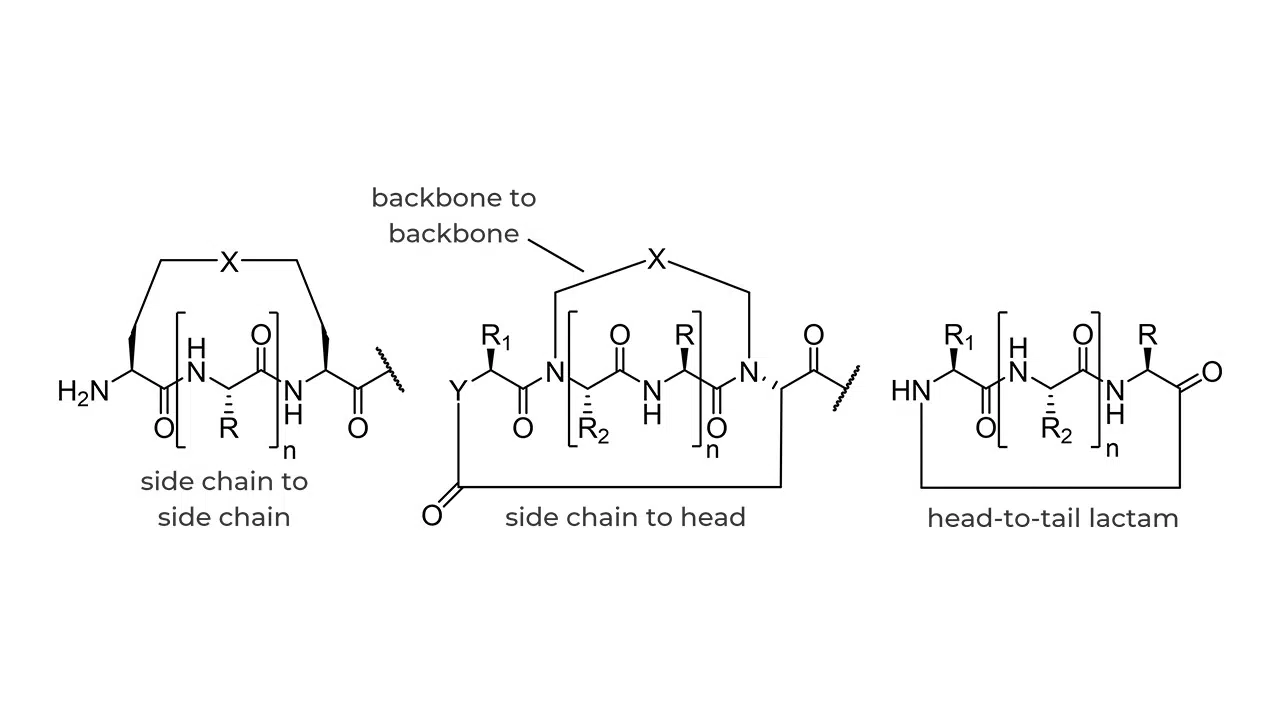
Protein-protein and protein-peptide interactions play critical roles in all types of cellular processing. Peptides are natural partners to proteins and, as ligands, bind to proteins with high affinity due to their capacity to adapt to the often flexible protein surface. Despite this, peptides have drawbacks as drug candidates that include low plasma bioavailability, instability from proteolytic enzymes, and poor passive membrane permeability. Some success has been achieved with linear peptides, particularly peptides that maintain α-helical secondary structures. These motifs can be introduced to stabilized α-helical motifs by common “peptide-stapling” approaches, but stapled peptides can suffer from low bioactivity and poor solubility. Another strategy to maintain peptide secondary structure is modification by macrocyclization.
SAN JOSE, CA., Sept 3, 2020 /CPCNewswire/ — CPC Scientific Inc. is pleased to announce that the European Commission (EC) has granted the Conditional Marketing Authorization (CMA) for MYR Pharmaceuticals lead compound HEPCLUDEX®. CPC Scientific serves as a supplier and partner to MYR Pharmaceuticals for the development and manufacturing of bulevirtide (Hepcludex). This drug is […]

Curreli, Francesca, Sofia MB Victor, Shahad Ahmed, Aleksandra Drelich, Xiaohe Tong, Chien-Te K. Tseng, Christopher D. Hillyer, and Asim K. Debnath. Mbio 11, no. 6 (2020): e02451-20.
We have synthesized (CPC Scientific, Inc.) four stapled peptides, as depicted in Figure 2. We also synthesized the linear peptide, NYBSP-C, as a control. Besides, we purchased a linear peptide, SBP1, to use as a control, which was reported recently to bind to SARS-CoV-2 RBD with high affinity (KD = 47nM).
Abdulganiyyu, I. A.; Kaczmarek, K.; Zabrocki, J.; Nachman, R. J.; Marchal, E.; Schellens, S.; Verlinden, H.; Broeck, J. V.; Marco, H.; Jackson, G. E. Insect Biochemistry and Molecular Biology 2020, 103362.
A head-to-tail cyclic, octapeptide analog of Locmi-AKH-I, cycloAKH (cyclo[LNFTPNWG]) was synthesized to severely restrict the conformational freedom of the AKH structure.