
The reactions were conducted in 50 ml volumes in 96-well plates and contained GST-tagged human-recombinant ABL1(T315I) kinase intracellular domain (1 nM), 3 mM phosphoacceptor peptide, 59 FAM-
EAIYAAPFAKKK-OH (CPC Scientific, also known as ProfilerPro Peptide 2, Caliper Life Sciences), test compound (11-dose threefold serial dilutions, 2% DMSO final) or DMSO only, 1 mM dithiothreitol (DTT), 0.002% Tween-20 and 5 mM MgCl2 in 25 mM HEPES, pH 7.1
Abstract
The BCR-ABL1 fusion gene is a driver oncogene in chronic myeloid leukaemia and 30–50% of cases of adult acute lymphoblastic leukaemia1. Introduction of ABL1 kinase inhibitors (for example, imatinib) has markedly improved patient survival2, but acquired drug resistance remains a challenge3,4,5. Point mutations in the ABL1 kinase domain weaken inhibitor binding6 and represent the most common clinical resistance mechanism. The BCR–ABL1 kinase domain gatekeeper mutation Thr315Ile (T315I) confers resistance to all approved ABL1 inhibitors except ponatinib7,8, which has toxicity limitations. Here we combine comprehensive drug sensitivity and resistance profiling of patient cells ex vivo with structural analysis to establish the VEGFR tyrosine kinase inhibitor axitinib as a selective and effective inhibitor for T315I-mutant BCR–ABL1-driven leukaemia. Axitinib potently inhibited BCR–ABL1(T315I), at both biochemical and cellular levels, by binding to the active form of ABL1(T315I) in a mutation-selective binding mode. These findings suggest that the T315I mutation shifts the conformational equilibrium of the kinase in favour of an active (DFG-in) A-loop conformation, which has more optimal binding interactions with axitinib. Treatment of a T315I chronic myeloid leukaemia patient with axitinib resulted in a rapid reduction of T315I-positive cells from bone marrow. Taken together, our findings demonstrate an unexpected opportunity to repurpose axitinib, an anti-angiogenic drug approved for renal cancer, as an inhibitor for ABL1 gatekeeper mutant drug-resistant leukaemia patients. This study shows that wild-type proteins do not always sample the conformations available to disease-relevant mutant proteins and that comprehensive drug testing of patient-derived cells can identify unpredictable, clinically significant drug-repositioning opportunities.
SOCIAL MEDIA
Connect with us and stay updated by following our social media channels.
Latest Briefings from our Knowledge Center
Press Releases, Industry News, Articles, and Technical Content
DePalma, S. J.; Davidson, C. D.; Stis, A. E.; Helms, A. S.; Baker, B. M., Biomaterials Science, 2021, 9 (1), 93-107.
.. matrices were functionalized with cell adhesive peptides.. Gly-Phe-Hyp-Gly-Glu-Arg (GFOGER; CPC Scientific) via Michael-Type addition to available vinyl sulfone groups."
Zonari, A.; Brace, L. E.; Al-Katib, K. Z.; Porto, W. F.; Foyt, D.; Guiang, M.; Cruz, E. A. O.; Marshall, B.; Salgueiro, W. G.; Inan, M. D., bioRxiv 2020, 2020.10. 30.362822.
The top hits peptides selected (peptide 14, 144, 156, 195, and 393) from the screening were purchased from CPC Scientific Inc.
Diao, J., Komura, R., Sano, T., Pantua, H., Storek, K.M., Inaba, H., Ogawa, H., Noland, C.L., Peng, Y., Gloor, S.L. and Yan, D. bioRxiv (2020): 2020-10.
- Departments of Infectious Diseases, Structural Biology, Biochemical and Cellular Pharmacology, Translational Immunology, Pathology, and Early Discovery Biochemistry, Genentech, South San Francisco, CA 94080 USA
The standard assay consists of 6 μL reaction mixture with 3 nM Lgt-DDM, 50 μM phosphatidylglycerol (1,2-dipalmitoyl-sn-glycero-3-phospho-(1’-rac-glycerol), Avanti), 12.5 μM Pal-IAAC peptide substrate derived from the Pal lipoprotein (MQLNKVLKGLMIALPVMAIAACSSNKN, synthesized by CPC Scientific)
Pantua, H., Skippington, E., Braun, M.G., Noland, C.L., Diao, J., Peng, Y., Gloor, S.L., Yan, D., Kang, J., Katakam, A.K. and Reeder, J. MBio 11, no. 5 (2020): 10-1128.
- Departments of Infectious Diseases, OMNI Bioinformatics, Chemistry, Structural Biology, Biochemical and Cellular Pharmacology, Translational Immunology, Pathology, Molecular Biology, Genentech, South San Francisco, California, USA
MQLNKV-L(U13C6,15N)-KGL(U13C6,15N)MIALPVMAIAA-dipalmitoyl2C-SSNKNGG-K-biotin, which upon cleavage by LspA, yields the product peptide dipalmitoyl2C-SSNKNGG-K-biotin. A product standard [dipalmitoyl2C-SSNKNAAK-(NHCH2CH2NH)-biotin; CPC Scientific] was in the reaction mixture as an internal standard for normalization of product quantitation.
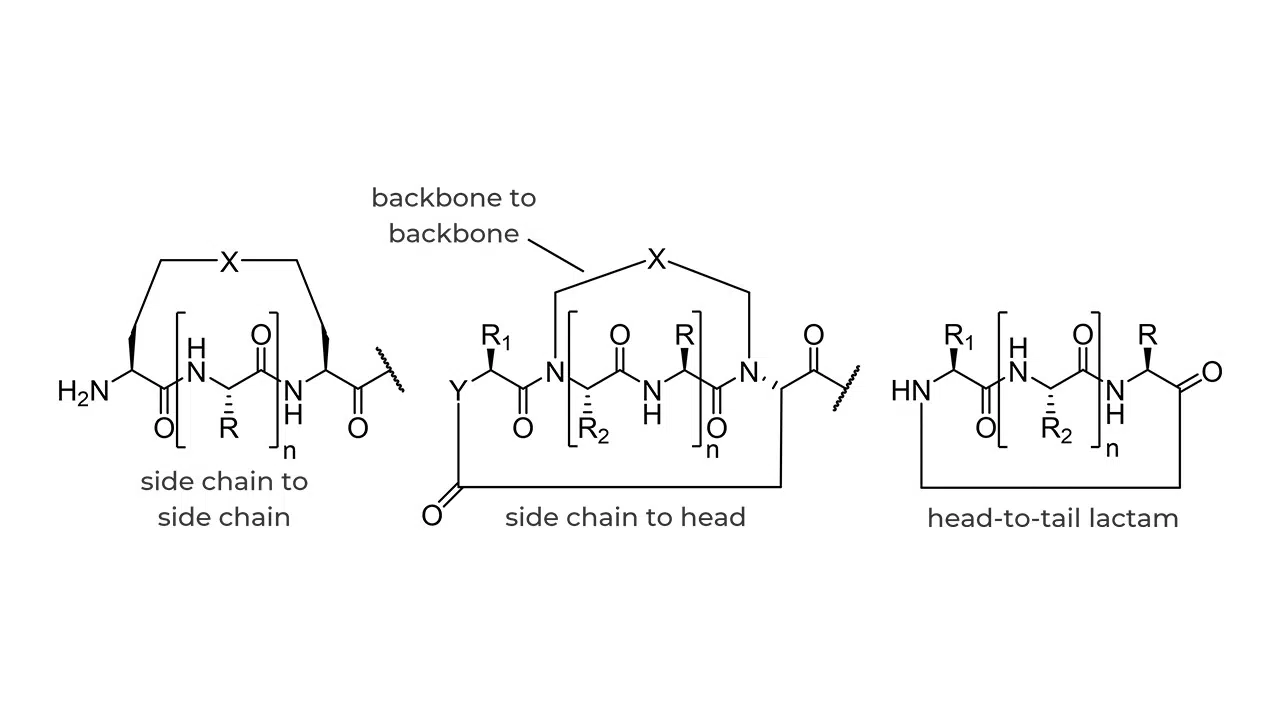
Protein-protein and protein-peptide interactions play critical roles in all types of cellular processing. Peptides are natural partners to proteins and, as ligands, bind to proteins with high affinity due to their capacity to adapt to the often flexible protein surface. Despite this, peptides have drawbacks as drug candidates that include low plasma bioavailability, instability from proteolytic enzymes, and poor passive membrane permeability. Some success has been achieved with linear peptides, particularly peptides that maintain α-helical secondary structures. These motifs can be introduced to stabilized α-helical motifs by common “peptide-stapling” approaches, but stapled peptides can suffer from low bioactivity and poor solubility. Another strategy to maintain peptide secondary structure is modification by macrocyclization.
SAN JOSE, CA., Sept 3, 2020 /CPCNewswire/ — CPC Scientific Inc. is pleased to announce that the European Commission (EC) has granted the Conditional Marketing Authorization (CMA) for MYR Pharmaceuticals lead compound HEPCLUDEX®. CPC Scientific serves as a supplier and partner to MYR Pharmaceuticals for the development and manufacturing of bulevirtide (Hepcludex). This drug is […]

Curreli, Francesca, Sofia MB Victor, Shahad Ahmed, Aleksandra Drelich, Xiaohe Tong, Chien-Te K. Tseng, Christopher D. Hillyer, and Asim K. Debnath. Mbio 11, no. 6 (2020): e02451-20.
We have synthesized (CPC Scientific, Inc.) four stapled peptides, as depicted in Figure 2. We also synthesized the linear peptide, NYBSP-C, as a control. Besides, we purchased a linear peptide, SBP1, to use as a control, which was reported recently to bind to SARS-CoV-2 RBD with high affinity (KD = 47nM).
Abdulganiyyu, I. A.; Kaczmarek, K.; Zabrocki, J.; Nachman, R. J.; Marchal, E.; Schellens, S.; Verlinden, H.; Broeck, J. V.; Marco, H.; Jackson, G. E. Insect Biochemistry and Molecular Biology 2020, 103362.
A head-to-tail cyclic, octapeptide analog of Locmi-AKH-I, cycloAKH (cyclo[LNFTPNWG]) was synthesized to severely restrict the conformational freedom of the AKH structure.