
Peptides (CPC Scientific) representing selected sequences of gD and gB that had previously been demonstrated to contain T cell epitopes (data not shown) were synthesized as 15-mers, quality assessed, and formulated into pools representing each protein.
Abstract
Despite several attempts to develop an effective prophylactic vaccine for HSV-2, all have failed to show efficacy in the clinic. The most recent of these failures was the GlaxoSmithKline (GSK) subunit vaccine based on the glycoprotein gD with the adjuvant monophosphoryl lipid A (MPL). In a phase 3 clinical trial, this vaccine failed to protect from HSV-2 disease, even though good neutralizing antibody responses were elicited. We aimed to develop a superior, novel HSV-2 vaccine containing either gD or gB alone or in combination, together with the potent adjuvant CpG oligodeoxynucleotides (CPG). The immunogenic properties of these vaccines were compared in mice. We show that gB/CPG/alum elicited a neutralizing antibody response similar to that elicited by gD/CPG/alum vaccine but a significantly greater gamma interferon (IFN-γ) T cell response. Furthermore, the combined gB-gD/CPG/alum vaccine elicited significantly greater neutralizing antibody and T cell responses than gD/MPL/alum. The efficacies of these candidate vaccines were compared in the mouse and guinea pig disease models, including a novel male guinea pig genital disease model. These studies demonstrated that increased immune response did not correlate to improved protection. First, despite a lower IFN-γ T cell response, the gD/CPG/alum vaccine was more effective than gB/CPG/alum in mice. Furthermore, the gB-gD/CPG/alum vaccine was no more effective than gD/MPL/alum in mice or male guinea pigs. We conclude that difficulties in correlating immune responses to efficacy in animal models will act as a deterrent to researchers attempting to develop effective HSV vaccines.
SOCIAL MEDIA
Connect with us and stay updated by following our social media channels.
Latest Briefings from our Knowledge Center
Press Releases, Industry News, Articles, and Technical Content
Zonari, A.; Brace, L. E.; Al-Katib, K. Z.; Porto, W. F.; Foyt, D.; Guiang, M.; Cruz, E. A. O.; Marshall, B.; Salgueiro, W. G.; Inan, M. D., bioRxiv 2020, 2020.10. 30.362822.
The top hits peptides selected (peptide 14, 144, 156, 195, and 393) from the screening were purchased from CPC Scientific Inc.
Diao, J., Komura, R., Sano, T., Pantua, H., Storek, K.M., Inaba, H., Ogawa, H., Noland, C.L., Peng, Y., Gloor, S.L. and Yan, D. bioRxiv (2020): 2020-10.
- Departments of Infectious Diseases, Structural Biology, Biochemical and Cellular Pharmacology, Translational Immunology, Pathology, and Early Discovery Biochemistry, Genentech, South San Francisco, CA 94080 USA
The standard assay consists of 6 μL reaction mixture with 3 nM Lgt-DDM, 50 μM phosphatidylglycerol (1,2-dipalmitoyl-sn-glycero-3-phospho-(1’-rac-glycerol), Avanti), 12.5 μM Pal-IAAC peptide substrate derived from the Pal lipoprotein (MQLNKVLKGLMIALPVMAIAACSSNKN, synthesized by CPC Scientific)
Pantua, H., Skippington, E., Braun, M.G., Noland, C.L., Diao, J., Peng, Y., Gloor, S.L., Yan, D., Kang, J., Katakam, A.K. and Reeder, J. MBio 11, no. 5 (2020): 10-1128.
- Departments of Infectious Diseases, OMNI Bioinformatics, Chemistry, Structural Biology, Biochemical and Cellular Pharmacology, Translational Immunology, Pathology, Molecular Biology, Genentech, South San Francisco, California, USA
MQLNKV-L(U13C6,15N)-KGL(U13C6,15N)MIALPVMAIAA-dipalmitoyl2C-SSNKNGG-K-biotin, which upon cleavage by LspA, yields the product peptide dipalmitoyl2C-SSNKNGG-K-biotin. A product standard [dipalmitoyl2C-SSNKNAAK-(NHCH2CH2NH)-biotin; CPC Scientific] was in the reaction mixture as an internal standard for normalization of product quantitation.
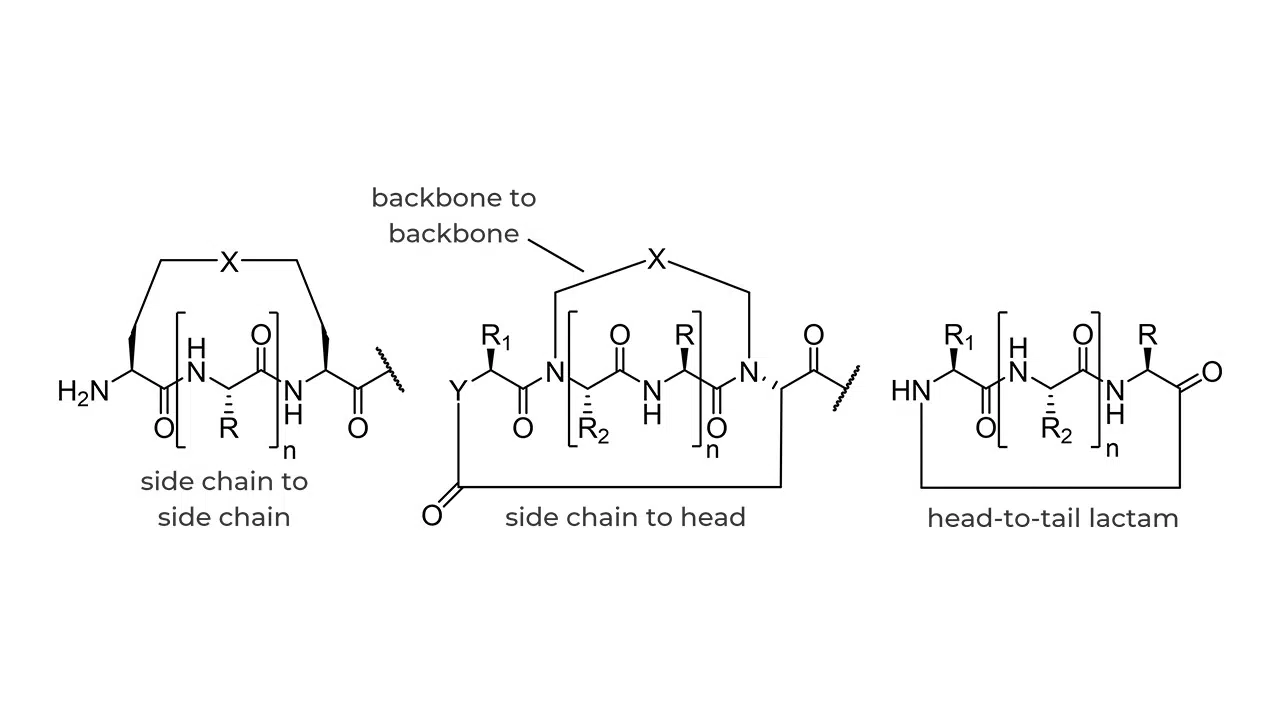
Protein-protein and protein-peptide interactions play critical roles in all types of cellular processing. Peptides are natural partners to proteins and, as ligands, bind to proteins with high affinity due to their capacity to adapt to the often flexible protein surface. Despite this, peptides have drawbacks as drug candidates that include low plasma bioavailability, instability from proteolytic enzymes, and poor passive membrane permeability. Some success has been achieved with linear peptides, particularly peptides that maintain α-helical secondary structures. These motifs can be introduced to stabilized α-helical motifs by common “peptide-stapling” approaches, but stapled peptides can suffer from low bioactivity and poor solubility. Another strategy to maintain peptide secondary structure is modification by macrocyclization.
SAN JOSE, CA., Sept 3, 2020 /CPCNewswire/ — CPC Scientific Inc. is pleased to announce that the European Commission (EC) has granted the Conditional Marketing Authorization (CMA) for MYR Pharmaceuticals lead compound HEPCLUDEX®. CPC Scientific serves as a supplier and partner to MYR Pharmaceuticals for the development and manufacturing of bulevirtide (Hepcludex). This drug is […]

Curreli, Francesca, Sofia MB Victor, Shahad Ahmed, Aleksandra Drelich, Xiaohe Tong, Chien-Te K. Tseng, Christopher D. Hillyer, and Asim K. Debnath. Mbio 11, no. 6 (2020): e02451-20.
We have synthesized (CPC Scientific, Inc.) four stapled peptides, as depicted in Figure 2. We also synthesized the linear peptide, NYBSP-C, as a control. Besides, we purchased a linear peptide, SBP1, to use as a control, which was reported recently to bind to SARS-CoV-2 RBD with high affinity (KD = 47nM).
Abdulganiyyu, I. A.; Kaczmarek, K.; Zabrocki, J.; Nachman, R. J.; Marchal, E.; Schellens, S.; Verlinden, H.; Broeck, J. V.; Marco, H.; Jackson, G. E. Insect Biochemistry and Molecular Biology 2020, 103362.
A head-to-tail cyclic, octapeptide analog of Locmi-AKH-I, cycloAKH (cyclo[LNFTPNWG]) was synthesized to severely restrict the conformational freedom of the AKH structure.
Clairfeuille, T., Buchholz, K.R., Li, Q., Verschueren, E., Liu, P., Sangaraju, D., Park, S., Noland, C.L., Storek, K.M., Nickerson, N.N. and Martin, L. Nature 584, no. 7821 (2020): 479-483.
- Departments of Structural Biology, Infectious Diseases, Microchemistry, Proteomics & Lipidomics, Drug Metabolism & Pharmacokinetics, Translational Immunology, BioMolecular Resources, Biochemical & Cellular Pharmacology, Bioinformatics & Computational Biology, Discovery Chemistry Departments, Genentech Inc., South San Francisco, CA, USA.
LAB peptides ([..], CPC Scientific, [..] l, standard solid-phase peptide synthesis) at 10 mM in 50 mM Tris, pH 8, and 100 mM NaCl were diluted in MHB II cation adjusted broth (800 μM top concentration) or LB. Where indicated, EDTA was added to a final concentration of 0.5 mM.