
"Cryptdin 2 (UniProtKB: P28309, LRDLVCYCRTRGCKRRERMNGTCRKGHLMYTLCCR)... obtained by oxidative refolding of partially purified linear peptides (synthesized by CPC Scientific...) and purifying the correctly folded species by reverse-phase high-pressure liquid chromatography (RP-HPLC). Purity was determined by analytical RP-HPLC, and the mass of the disulfide-bonded peptides was verified by high mass accuracy liquid chromatography-mass spectrometry."
Abstract
The small intestinal epithelium produces numerous antimicrobial peptides and proteins, including abundant enteric α-defensins. Although they most commonly function as potent antivirals in cell culture, enteric α-defensins have also been shown to enhance some viral infections in vitro. Efforts to determine the physiologic relevance of enhanced infection have been limited by the absence of a suitable cell culture system. To address this issue, here we use primary stem cell-derived small intestinal enteroids to examine the impact of naturally secreted α-defensins on infection by the enteric mouse pathogen, mouse adenovirus 2 (MAdV-2). MAdV-2 infection was increased when enteroids were inoculated across an α-defensin gradient in a manner that mimics oral infection but not when α-defensin levels were absent or bypassed through other routes of inoculation. This increased infection was a result of receptor-independent binding of virus to the cell surface. The enteroid experiments accurately predicted increased MAdV-2 shedding in the feces of wild type mice compared to mice lacking functional α-defensins. Thus, our studies have shown that viral infection enhanced by enteric α-defensins may reflect the evolution of some viruses to utilize these host proteins to promote their own infection.
SOCIAL MEDIA
Connect with us and stay updated by following our social media channels.
Latest Briefings from our Knowledge Center
Press Releases, Industry News, Articles, and Technical Content
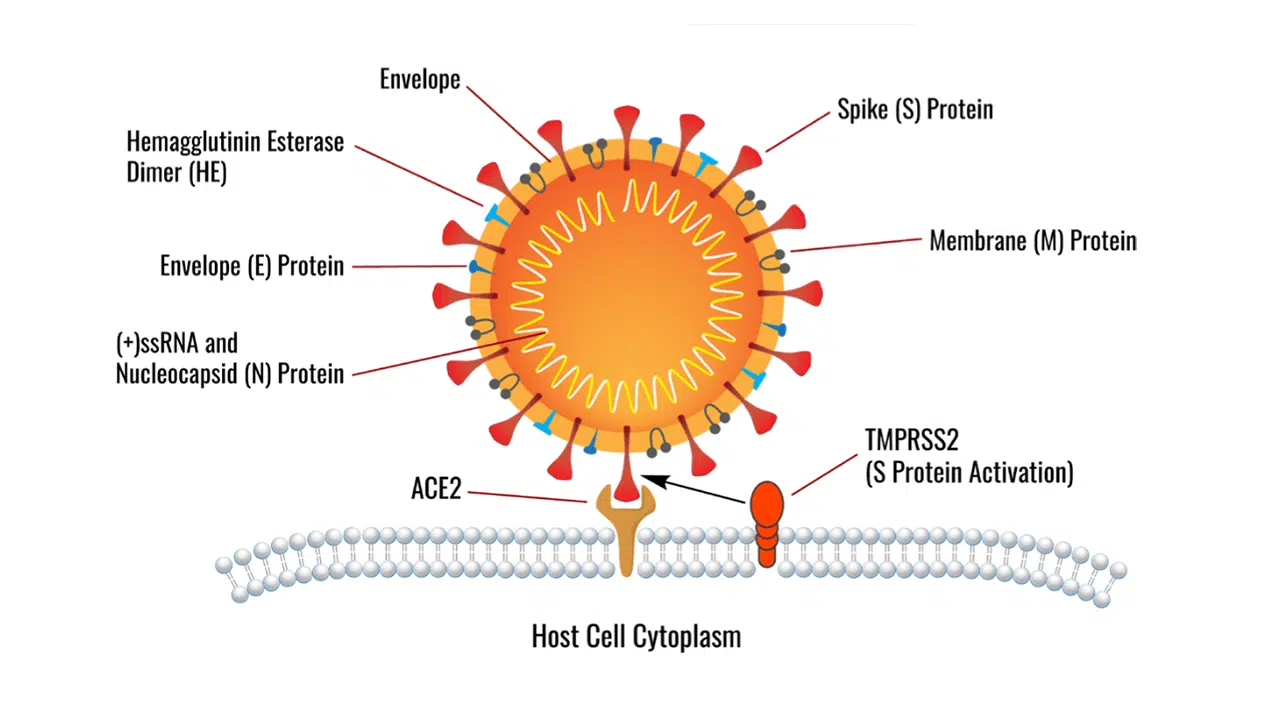
Mutations to the RBD of SARS-CoV have resulted in the reorganization of SARS-CoV-2 RBD, specifically to the loops that are in close proximity to the ACE2-binding ridge. Due to these structural changes, an additional intramolecular main-chain hydrogen bond is gained between Asn487 and Ala475 (Figure 4a). The Asn487–Ala475 hydrogen bond causes the RBM of SARS-CoV-2 to be more structurally compact, enabling the loop containing Ala475 to move into closer proximity to the ACE2 α1 helix. Closer contact between the RBM and α1 helix of ACE2 results in more intermolecular interactions (Figure 4a,b). Some of these interactions include hydrogen bonds between Gln493 (SARS-CoV-2) and Glu35 (ACE2),[3b,c] and main-chain hydrogen bonds between Gly502 and Lys31.
Froning, K., Maguire, J., Sereno, A., Huang, F., Chang, S., Weichert, K., Frommelt, A.J., Dong, J., Wu, X., Austin, H. and Conner, E.M. Nature Communications 11, no. 1 (2020): 2330.
- Eli Lilly Biotechnology Center, 10300 Campus Point Drive, San Diego, CA 92121, USA
SLLMWITQC (NY-ESO-1) peptide (synthesized by CPC Scientific), 100 μL total volume, for 3 h.
Buss, Colin G., and Sangeeta N. Bhatia. Proceedings of the National Academy of Sciences (2020).
Tandem Peptides. Tandem peptides were purchased from CPC Scientific. Sequences are: mTP-TAMRA-LyP1 (Myr-GWTLNSAGYLLGKINLKALA-ALAKKILGGGGK(5TAMRA)-CGNKRTRGC (C-C bridge)); [..] PEGylated formulations of these peptides were synthesized as previously described (49). The sequences are: [..] mTP-PEG-ARAL (Myr-GWTLNSAGYLLGKINLKALA-ALAKKILC-PEG5K-GGGARALPSQRSR).
To Our Valued Customers,
With the growing concern of the Coronavirus Disease 2019 (COVID-19) outbreak, CPC Scientific wants to assure you that our peptide manufacturing facilities are fully operational and staffed. We continue to deliver our GMP- and research-grade peptides on time to the researchers and pharmaceutical companies who rely on our products. The safety of […]
San Jose, CA and New York, NY – CPC Scientific Inc., a CDMO specializing in synthetic peptide manufacturing, will host at DCAT Week® for a 5th consecutive year. Their representatives will be open for meetings during March 23-26th at:
Omni Berkshire Place #1632
21 East 52nd St.
New York, NY 10022Appointments requests may be requested at the CPC […]
Kudryashev, Julia A., Lauren E. Waggoner, Hope T. Leng, Nicholas H. Mininni, and Ester J. Kwon. ACS Sensors (2020).
Calpain substrate peptide (QSY21-QEVYGAMP-K(Cy5)-PEG2-GC- NH2) was synthesized by CPC Scientific Inc. (Sunnyvale, CA …

Adem, Sandeep, Sonal Jain, Michael Sveiven, Xiahan Zhou, Anthony J. O’Donoghue, and Drew A. Hall. Scientific Reports 10, no. 1 (2020): 1-10
Biotin-PEG36-Thr-Phe-Ser-Tyr-Nle-Arg-Trp-Pro-PEG12-Cys (known as peptide) was synthesized by CPC Scientific..

Baba, Osamu, Andrew Elvington, Martyna Szpakowska, Deborah Sultan, Gyu Seong Heo, Xiaohui Zhang, Hannah Luehmann et al. bioRxiv (2020).
The FC131 peptide (cyclo[2-Nal-Gly-d-Tyr-NMe-d-Orn-Arg]) was synthesized by CPC Scientific (Sunnyvale, CA).