
"(R/K)-RMAD-4 [rhesus myeloid α-defensin 4] [(R1/2/5/7/10/13/14/26/33K)-RMAD-462-94] was custom synthesized by CPC Scientific, Inc. (San Jose, CA) and refolded as described previously…"
Abstract
Cationic amino acids contribute to α-defensin bactericidal activity. Curiously, although Arg and Lys have equivalent electropositive charges at neutral pH, α-defensins contain an average of nine Arg residues per Lys residue. To investigate the role of high α-defensin Arg content, all Arg residues in mouse Paneth cell α-defensin cryptdin 4 (Crp4) and rhesus myeloid α-defensin 4 (RMAD-4) were replaced with Lys to prepare (R/K)-Crp4 and (R/K)-RMAD-4, respectively. Lys-for-Arg replacements in Crp4 attenuated bactericidal activity and slowed the kinetics of Escherichia coli ML35 cell permeabilization, and (R/K)-Crp4 required longer exposure times to reduce E. coli cell survival. In marked contrast, Lys substitutions in RMAD-4 improved microbicidal activity against certain bacteria and permeabilized E. coli more effectively. Therefore, Arg→Lys substitutions attenuated activity in Crp4 but not in RMAD-4, and the functional consequences of Arg→Lys replacements in α-defensins are dependent on the peptide primary structure. In addition, the bactericidal effects of (R/K)-Crp4 and (R/K)-RMAD-4 were more sensitive to inhibition by NaCl than those of the native peptides, suggesting that the high Arg content of α-defensins may be under selection to confer superior microbicidal function under physiologic conditions.
SOCIAL MEDIA
Connect with us and stay updated by following our social media channels.
Latest Briefings from our Knowledge Center
Press Releases, Industry News, Articles, and Technical Content
Ikeda, Z., Kakegawa, K., Kikuchi, F., Itono, S., Oki, H., Yashiro, H., Hiyoshi, H., Tsuchimori, K., Hamagami, K., Watanabe, M. and Sasaki, M. Journal of Medicinal Chemistry 65, no. 12 (2022): 8456-8477.
- Research, Takeda Pharmaceutical Company Limited, 26-1, Muraokahigashi 2-chome, Fujisawa, Kanagawa 251-8555, Japan
Subsequently, 5FAM–Abu–Gly–Asp–Asp–Asp–Lys–Ile–Val–Gly–Gly–Lys(CPQ2)–Lys–Lys–NH2 (purity: 97.2%, CPC Scientific, Inc.) was diluted with an assay buffer to prepare a 2.1 μM substrate solution.
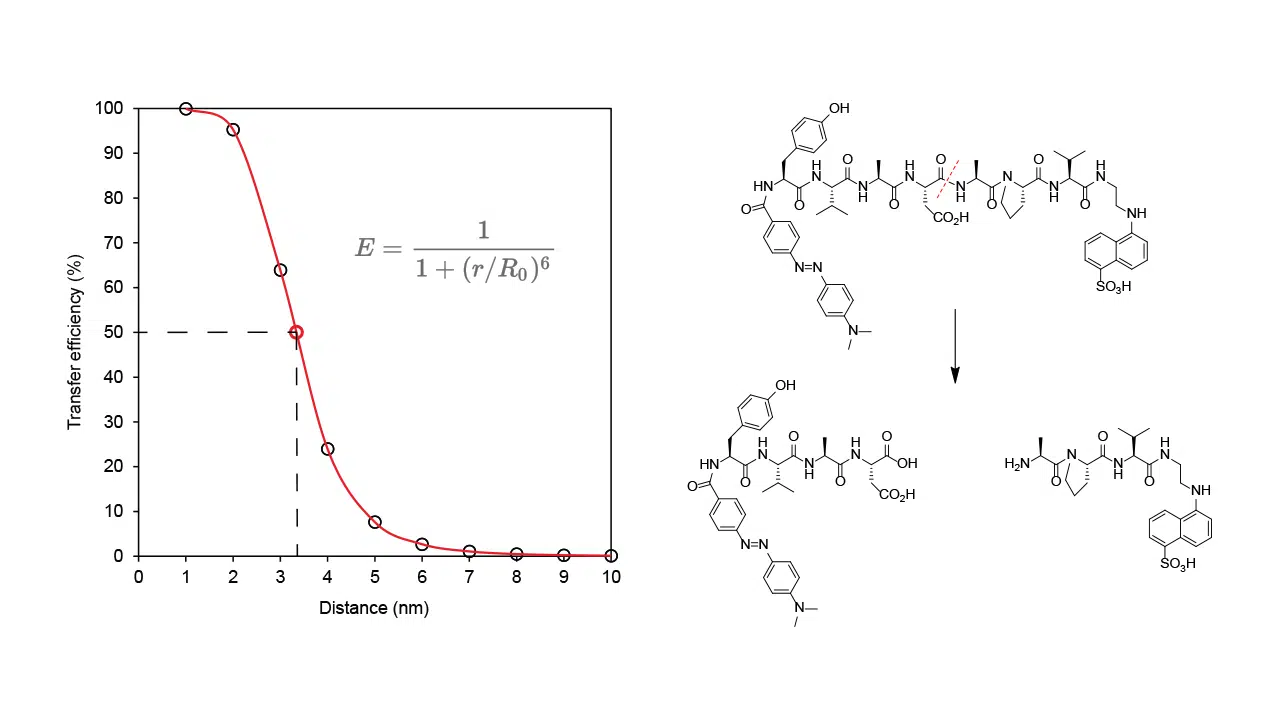
The transferred energy from a fluorescent donor is converted into molecular vibrations if the acceptor is a non-fluorescent dye (quencher). When the FRET is terminated (by separating donor and acceptor), an increase of donor fluorescence can be detected. The design and synthesis work at CPC for FRET and TR-FRET peptide substrates include modification of sequences, selection of donor/quencher pairs, improvement of FRET substrate solubility and quenching efficiency.
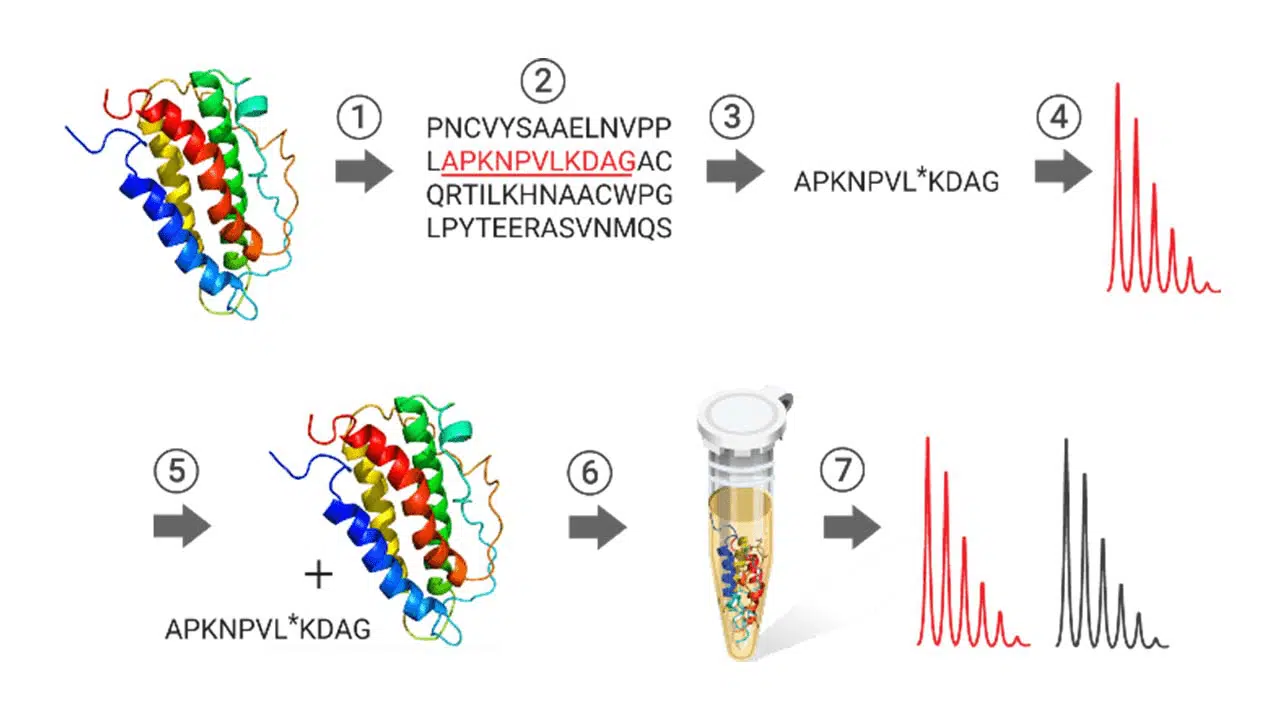
Genomics research shows that more than a million proteins are encoded by approximately 30,000 human genes. Proteomics, the study of proteins encoded by the genome, includes identifying post-translational modifications, structural analyses, protein localization studies, and protein quantitation. Mass spectroscopybased techniques have evolved as a powerful tool in proteomics. Stable isotope-labeled peptides (SIL peptides) are chemically and physically indistinguishable from their endogenous counterparts concerning retention time, ionization efficiency, and fragmentation pathways.
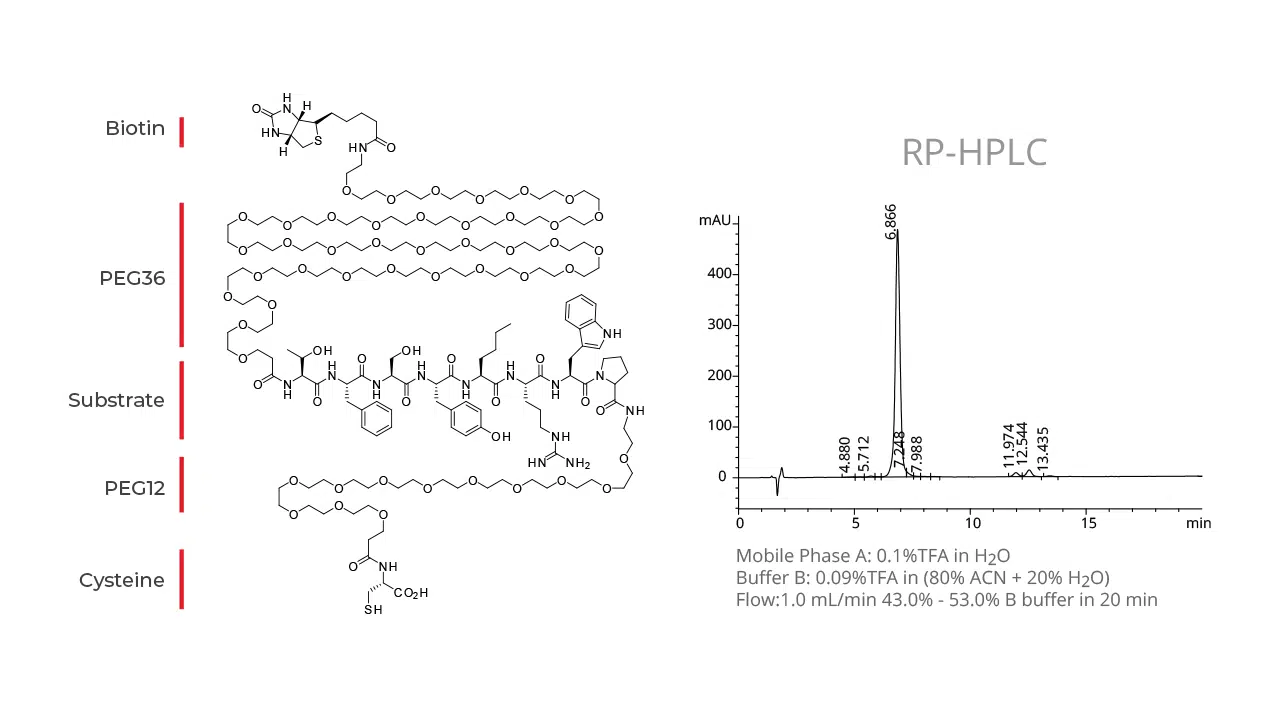
Peptides play a vital role in the pharmaceutical industry and drug therapeutic development; however, their in vivo applications are sometimes limited due to fast degradation by proteases, poor solubility, antigenic responses, and glomerular filtration in the kidney. The covalent attachment of polyethylene glycol (PEG) chains to peptides is one approach that can reduce immunogenicity, improve solubility, and reduce renal clearance.
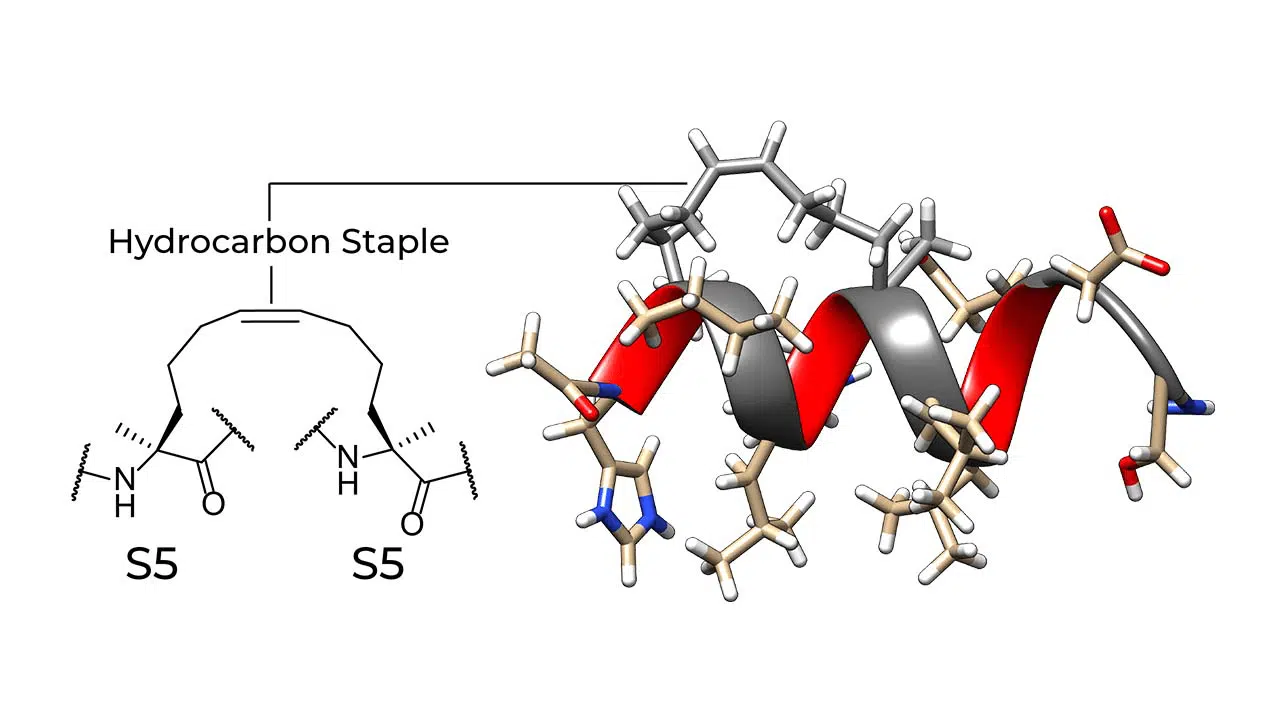
Hydrocarbon-stapled peptides are locked into their bioactive alpha-helical conformation through the site-specific introduction of a chemical brace, an all-hydrocarbon staple. The idea of peptide stapling was introduced to overcome the limitations of two broad classes of therapeutic agents (small molecules and protein biologics) in targeting intracellular protein-protein interactions. Small molecules only work on proteins with a specific surface feature, and most protein biologics do not penetrate cells. Because stapled peptides are locked into a stabilized α-helical structure (the most common element of protein secondary structures), they can easily penetrate cells.
![Locmi-AKH-I, cycloAKH (cyclo[LNFTPNWG]](https://cpcscientific.com/wp-content/uploads/2022/05/cyclo-LNFTPNWG-v2-1500sm.png)
Mogford, Jon E., George E. Davis, Steven H. Platts, and Gerald A. Meininger. Circulation research 79, no. 4 (1996): 821-826.
Locmi-AKH-I, cycloAKH (cyclo[LNFTPNWG]

CPC Scientific is pleased to announce and welcome David A. Godkin as VP of Business Operations! David will be responsible for the growth and development of our HR department and facilities management division. He brings 20+ years of experience in human resources and facility operations from the peptide industry. We are confident David will have […]
Bekdemir, Ahmet, Eden EL Tanner, Jesse Kirkpatrick, Ava P. Soleimany, Samir Mitragotri, and Sangeeta N. Bhatia Advanced Healthcare Materials (2022): 2102685.
Peptides [TDN-qFAM, C-(PEG)2-K(CPQ2)-GGGSRPfGG-5FAM] were obtained from Tufts University Peptide Core Facility or CPC Scientific, Inc (USA)
Mac, Quoc D., Anirudh Sivakumar, Hathaichanok Phuengkham, Congmin Xu, James R. Bowen, Fang-Yi Su, Samuel Z. Stentz et al. Nature Biomedical Engineering (2022): 1-15.
"FITC-labelled GzmB substrate peptides with internal quencher ((5FAM)aIEFDSG(K-CPQ2)kkc) were synthesized by CPC Scientific and used for all in vitro activity assays. [..] Quenched fluorescent peptides for screening candidate substrates ((5FAM)-{substrate}-(K-DABCYL)-amide"